About
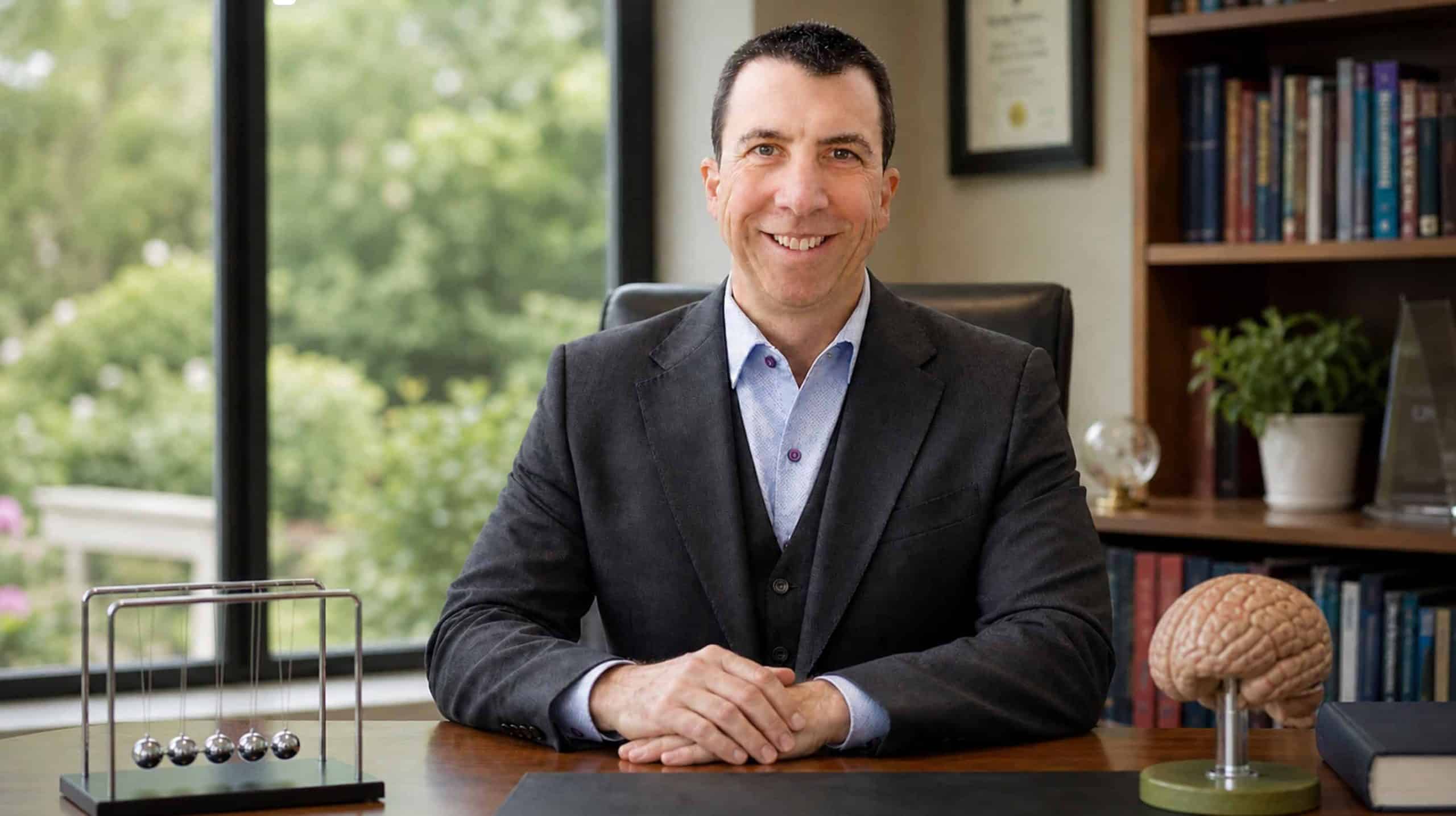
A/Prof Neil Mahant
Neurologist & Clinical Neurophysiologist · Clinical Associate Professor · MBBS, PhD, FRACP
20+
Years in clinical practice
80+
Peer-reviewed publications
Profile
Caring for the whole person
A/Prof Neil Mahant aims to provide the best possible medical care for people with movement disorders, incorporating up-to-date, evidence-based practice while always considering the whole person. His priorities include honest and clear communication, inclusivity, emphasising the importance of proactive lifestyle changes, caring for people at all stages of their condition, and working as part of a multidisciplinary team.
His areas of expertise cover conditions such as Parkinson's, dystonia, tremor, and complex Movement Disorders in both adults and children. He is recognised as an expert in complex neurotherapeutics, including infusional therapies for Parkinson's, DBS and botulinum toxin.
A/Prof Mahant has co-authored over 80 papers in peer-reviewed medical journals, covering topics including DBS, comparisons of continuous therapies (DBS, Duodopa, apomorphine) for fluctuating Parkinson's, botulinum toxin, tremor, dystonia, chorea, myoclonus, and care pathways for people with neurological disorders.
His medical degree, specialist training and PhD were all completed in Sydney, after which he completed a two-year Post-Doctoral Fellowship in Toronto, working with world-leading experts in Movement Disorders and DBS. After returning to Sydney, he helped establish and maintain multi- and inter-disciplinary teams, including the DBS Team, the Neurolaryngology Interdisciplinary Clinic for people with neurological voice disorders, and the first and only Paediatric DBS Team in Australia.
He is part of the internationally recognised Movement Disorders Unit at Westmead Hospital, working alongside neurologists, nurses, geneticists, Movement Disorder fellows and psychiatrists.
At a glance
Experience that makes a difference
Trained locally and internationally
His training was completed at internationally renowned centres, including Westmead Hospital (University of Sydney) and Toronto Western Hospital (University of Toronto).
80+ publications
Co-author of over 80 peer-reviewed papers across DBS, continuous therapies, botulinum toxin, tremor, dystonia and care pathways.
Multidisciplinary teams
Established and helped establish collaborative teams for DBS, neurolaryngology, Wilson's disease and Australia's only Paediatric DBS service.
Recognised expertise
Expert in complex neurotherapeutics including infusional therapies, DBS and botulinum toxin.
Passion for teaching and research
He strives to practice medicine at the highest standards. But this is not enough - it is important to educate the clinicians in current practice, and tomorrow's leaders such as specialists in training and medical students. Research is also crucial including participating in clinical trials of new therapies and research to better understand Movement Disorders.
Training & Career
A path defined by Movement Disorders
- Bachelor of Medicine, Bachelor of Surgery (MBBS), University of Sydney
- Internship, Residency, Basic Physician Training, Royal Prince Alfred Hospital
- Advanced Training in Neurology (FRACP), RNS & Westmead Hospitals
- PhD in Medicine, University of Sydney
- Post-Doctoral Fellowship in Movement Disorders & DBS, University of Toronto
His mentors include world leaders in Movement Disorders:
- Neurologists: Professor John Morris, Dr Ivan Lorentz, Professor Elizabeth McCusker, Professor Victor Fung, Professor Anthony Lang
- Neurosurgeon: Professor Andres Lozano
- Neurophysiologist: Professor Jonathan Dostrovsky

Research
Selected publications
A/Prof Mahant has co-authored 89+ peer-reviewed papers. Click any title to open the article in a new tab.
2026
Nagaratnam S, Binti Abd Hadi D, Qiu J, Mohammad S, Mahant N, Morales-Briceño H (2026). Dystonia combined with startle is a syndromic clue for CTNNB1-associated neurodevelopmental disorder.
2026
Nagaratnam SA, Ong TL, Martin A, McMaster J, Mahant N, Fung VSC, Silsby S (2026). Objective improvement in orthostatic tremor following spinal cord stimulation demonstrated using posturography. Mov Disord Clin Prac.
2026
Breasail MÓ, El-Leissy MB, Singh KP, et al., Mahant N, et al. (2026). The effects of anti-Parkinsonian medications on bone mineral density: A systematic review. Bone 208.
2026
Barnacoat J, Uraba WB, Hadi D, Stewart K, Lewis J, Coombes S, Waugh M-C, Farrar MA, Owler B, Mahant N, Dale RC, Paget S, Mohammad SS (2026). Implementation of Paediatric Deep Brain Stimulation: Experience from an Australian Tertiary Centre. J Child Neurol.
2026
Nagaratnam SA, Anderson C, Fung VSC, Mahant N (2026). Optimising DBS in essential tremor: clinical and neurophysiological considerations for targeting and programming. Clin Neurophysiol.


